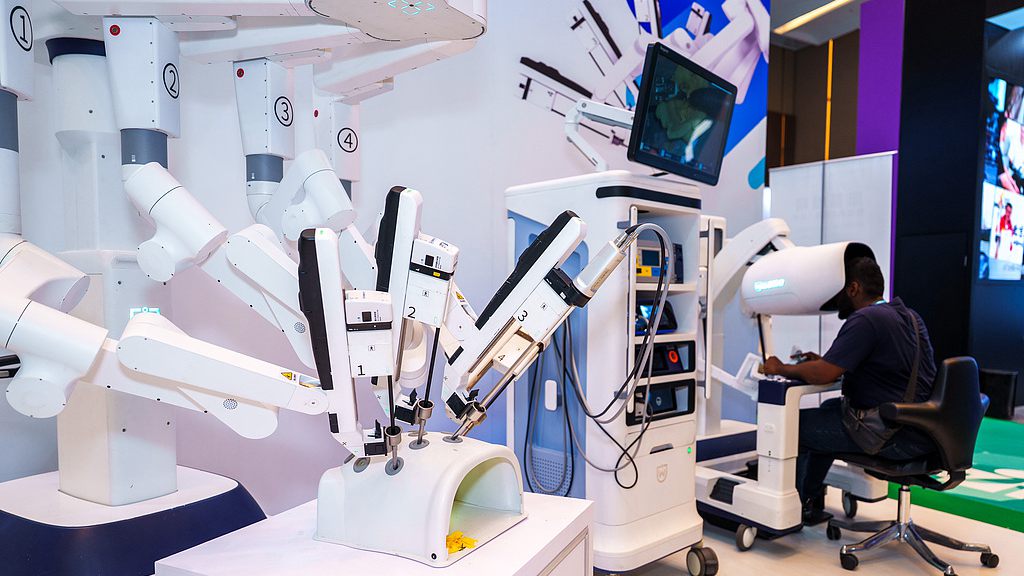
China, which has established the world’s largest healthcare service system, is already at the forefront of artificial intelligence (AI) research and application in medical fields as well as patient services.
Now China’s National Health Commission and four other authorities have called for the promotion and regulation of AI in the country’s health sector over the coming years, according to a document released on Tuesday.
The document outlines plans to establish high-quality datasets and trusted data infrastructure for the health industry by 2027, alongside the development of specialized large AI models and intelligent applications tailored to specific diseases and medical fields.
By 2030, intelligent diagnosis and treatment assistance will be universal in basic terms across China’s primary-level medical institutions, including community and village clinics, per a goal set out in the document. Meanwhile, hospitals at or above the secondary level in China’s three-tier hospital system will widely adopt AI technologies, such as intelligent medical-imaging diagnosis and clinical decision-making support technologies.
A number of globally leading scientific innovation and talent training bases will also be established.
The document also suggests expanded AI use in patient services, enabling hospitals to offer integrated intelligent services across the entire treatment process, including precise appointment scheduling, triage, pre-diagnosis and follow-up services.
It also highlights the creation of several national AI pilot bases within the healthcare sector, which will foster high-value application scenarios to drive the industry’s high-quality development.
Moreover, China plans to upgrade its intelligent epidemiological investigation systems to provide real-time, precise support for decision-making in the prevention and control of infectious diseases, according to the document.