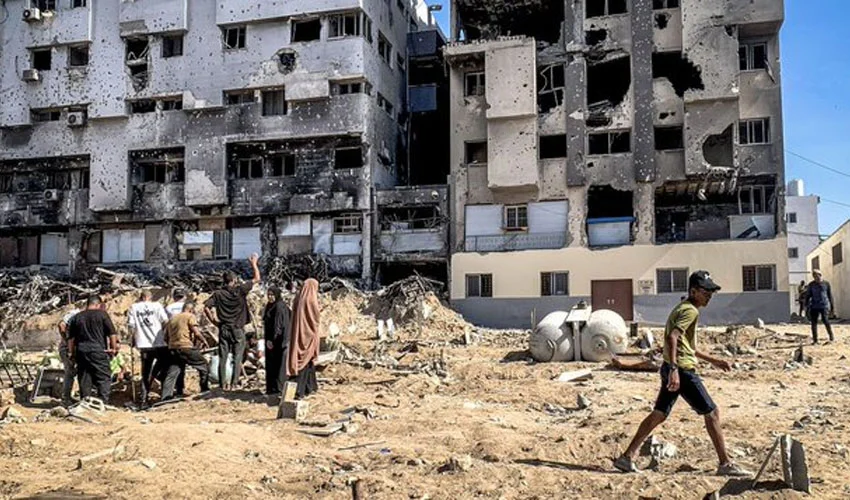
Israel has carried out fresh airstrikes in northern Gaza, killing at least two people despite announcing the resumption of a fragile ceasefire. The renewed assault follows a deadly wave of bombardments that killed more than 100 Palestinians earlier this week.
Israel’s latest airstrike hit Beit Lahiya in northern Gaza on Wednesday evening, according to al-Shifa Hospital. Officials said two people were killed when the Israeli military targeted what it claimed was a “weapons storage site” posing an “immediate threat” to its troops.
The renewed attacks came just a day after Prime Minister Benjamin Netanyahu ordered “powerful” retaliatory strikes in southern Gaza’s Rafah area following the reported killing of an Israeli soldier. The retaliatory assault left at least 104 Palestinians dead—mostly women and children—according to Gaza’s Health Ministry.
Israel later claimed the operation had killed senior Hamas fighters and declared that it would “resume” the ceasefire from mid-Wednesday.
Global outcry as civilian deaths mount
The United Nations strongly condemned the attacks that took place during the supposed truce.
UN Secretary-General Antonio Guterres’ spokesperson Stephane Dujarric said the UN chief “strongly condemns the killings due to Israeli air strikes of civilians in Gaza,” noting that “many of the victims were children.”
UN human rights chief Volker Türk described the incident as “appalling” and warned that both parties must not let peace “slip from our grasp.” Similar appeals were echoed by leaders from the United Kingdom, Germany, and the European Union, all urging Israel and Hamas to recommit to the ceasefire.
For Gaza residents, the new wave of attacks has reignited trauma. Al Jazeera’s correspondent Hani Mahmoud reported from Gaza City that “a brief hope for calm turned into despair.”
“For many people, it’s a stark reminder of the opening weeks of the genocide,” Mahmoud said, describing the intensity and destruction caused by the airstrikes.
Khadija al-Husni, a displaced mother sheltering with her children in Shati refugee camp, said, “We had just started to breathe again, trying to rebuild our lives.”
Hamas denies involvement
Hamas denied its fighters were involved in the Rafah incident that killed an Israeli soldier, reaffirming its commitment to the ceasefire. However, the group announced it would postpone transferring the remains of a deceased captive, citing Israel’s continued violations.
Hamas also warned that further escalation could “hinder the search, excavation, and recovery of bodies.”
Meanwhile, Israel barred Red Cross representatives from visiting Palestinian prisoners, claiming the visits could “pose a security threat.” Hamas called the move a violation of international law and said it “adds to the systematic abuse” of prisoners, including torture and starvation.
The Elders—a group of respected former world leaders—renewed calls for the release of Palestinian leader Marwan Barghouti. Despite Hamas including him in its prisoner exchange list, Israel continues to refuse his release.
Often referred to as the “Palestinian Nelson Mandela,” Barghouti remains imprisoned, symbolizing the ongoing political and humanitarian divide.