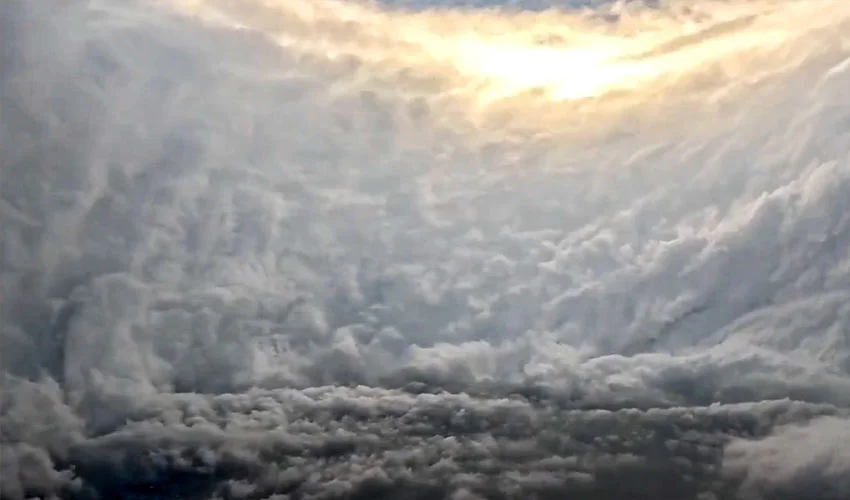
Hurricane Melissa, a Category 5 monster storm with sustained winds reaching 175 mph (282 km/h), is bearing down on Jamaica, threatening to unleash catastrophic damage on the island.
The U.S. National Hurricane Center (NHC) has described it as the strongest storm on Earth this year, and possibly the most powerful hurricane in Jamaica’s recorded history since 1851.
The hurricane has already claimed at least three lives in Jamaica, with four more deaths reported in Haiti and the Dominican Republic, bringing the total death toll to seven across the region.
In its 18:00 GMT advisory, the NHC warned that “catastrophic and life-threatening winds, flooding, and storm surge” would batter Jamaica Monday night into early Tuesday.
The storm was located about 145 miles (233 km) southwest of Kingston, moving west-northwest at just 3 mph (6 km/h) — an unusually slow pace that increases the risk of prolonged rainfall and deadly flooding.
“Do not venture outside,” NHC Director Michael Brennan warned. “Flash floods and landslides will be life-threatening through Tuesday.”
Deputy Director Jamie Rhome added that Jamaica could see up to 40 inches (100 cm) of rain over the next four days — “a catastrophic event given the island’s already saturated ground.”
Government orders mass evacuations
Jamaican Prime Minister Andrew Holness has ordered immediate evacuations from flood-prone and coastal areas, urging citizens to take the warnings seriously.
“Every Jamaican must prepare, stay indoors during the storm, and comply with evacuation orders,” Holness said in a televised address. “We will weather this storm and rebuild stronger.”
More than 881 emergency shelters have been activated nationwide, with school buses mobilized to transport vulnerable residents.
Education Minister Dana Morris Dixon warned that extensive flooding and landslides were inevitable:
“We’ve had rain all October. The ground is already saturated, so the additional rainfall will be devastating,” she said.
Communities cut off, residents fear looting
In Hagley Gap, a mountainous town in southeastern Jamaica, residents have been cut off by impassable roads.
“We can’t move. We’re scared,” said Damian Anderson, a 47-year-old teacher.
Meanwhile, Evadney Campbell, a Londoner visiting her family in Jamaica, told the BBC that neighbors were checking on each other but feared looting.
“People in the lowlands are reluctant to leave their homes because they worry thieves might break in,” she said.
Caribbean devastation grows
Melissa has already caused deadly flooding in Haiti, where at least three people have died and hundreds of homes have been inundated.
In the Dominican Republic, a 79-year-old man drowned in Santo Domingo, and a 13-year-old boy remains missing after being swept away by strong currents. Several others were rescued from their submerged vehicles.
The U.S. Hurricane Hunter aircraft, which collects critical data for storm forecasts, was forced to abort its mission after encountering severe turbulence within Melissa’s core, according to the U.S. National Oceanic and Atmospheric Administration (NOAA).
Meteorologists say the storm’s structure is “exceptionally intense,” with a central pressure drop placing it among the most powerful hurricanes ever observed in the Atlantic Basin.
Experts warn that no infrastructure on the island is capable of withstanding a storm of this magnitude.
“There could be significant dislocation,” Prime Minister Holness said in a CNN interview.
With torrential rain, destructive winds, and storm surges expected to continue through the week, officials fear widespread devastation — both physical and psychological — as communities brace for the full force of Hurricane Melissa.