Hamas has transferred the remains of another deceased Israeli captive to the Red Cross, which is now transporting the body to Israeli troops in Gaza, according to the Israeli military.
The handover took place on Monday, just hours after an Israeli drone strike killed two Palestinians in southern Gaza, highlighting the fragile nature of the ongoing U.S.-brokered ceasefire that came into effect on October 10.
Under the terms of the agreement, Hamas must return the remains of 28 captives, while 16 bodies have been handed over so far. The 20 surviving captives were freed on October 13 as part of the truce.
The Hostages and Missing Families Forum called on the Israeli government, the United States, and other mediators to suspend further phases of the ceasefire until Hamas returns all remaining bodies.
“Hamas knows exactly where every one of the deceased hostages is held,” the group said in a statement.
Hamas negotiator Khalil al-Hayya earlier claimed that finding the captives’ bodies had been difficult because “the occupation has altered the terrain of Gaza,” adding that some people who buried the remains were either killed in the conflict or had forgotten the locations.
Following his remarks, Israel allowed an Egyptian technical team to enter Gaza to assist in locating the remains using excavators and trucks.
Drone strike amid truce kills two Palestinians
Despite the ceasefire, Israeli forces conducted a drone attack near Khan Younis on Monday, killing at least two people, according to Nasser Hospital.
Gaza’s Ministry of Health reported that eight Palestinians were killed and 13 others injured in Israeli attacks across the enclave over the past 48 hours. Since the start of Israel’s war on Gaza in October 2023, at least 68,527 people have been killed and 170,395 wounded, the ministry added.
US defends Israel’s strike
Speaking aboard Air Force One, U.S. Secretary of State Marco Rubio defended Israel’s drone attack, claiming it did not violate the ceasefire because the target — a member of Palestinian Islamic Jihad — was allegedly planning an imminent assault on Israeli troops.
“We don’t view that as a violation of the ceasefire,” Rubio said. “They have the right if there’s an imminent threat to Israel, and all the mediators agree with that.”
Humanitarian crisis persists despite ceasefire
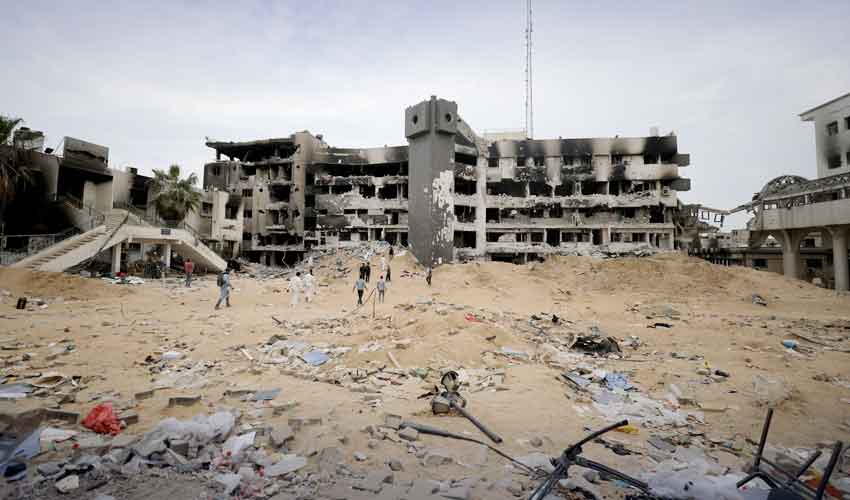
The United Nations reports that more than 473,000 displaced Palestinians have returned to northern Gaza since the truce began, only to face devastated homes, limited food and water, and collapsed infrastructure.
Younis al-Khatib, head of the Palestine Red Crescent Society, warned that rebuilding lives would take far longer than reconstructing buildings.
“Rebuilding human beings is more difficult than rebuilding destroyed homes,” he said during a visit to Oslo, where he met Norway’s prime minister and foreign minister.
The World Health Organization (WHO) estimates that over one million people in Gaza now need mental health support, up from about 485,000 before the war.
According to UNICEF, nearly all children in Gaza require psychological care due to displacement, loss, and trauma.
“Gaza has been the most dangerous place in the world to be a child,” said Tess Ingram, UNICEF’s spokesperson in Gaza.