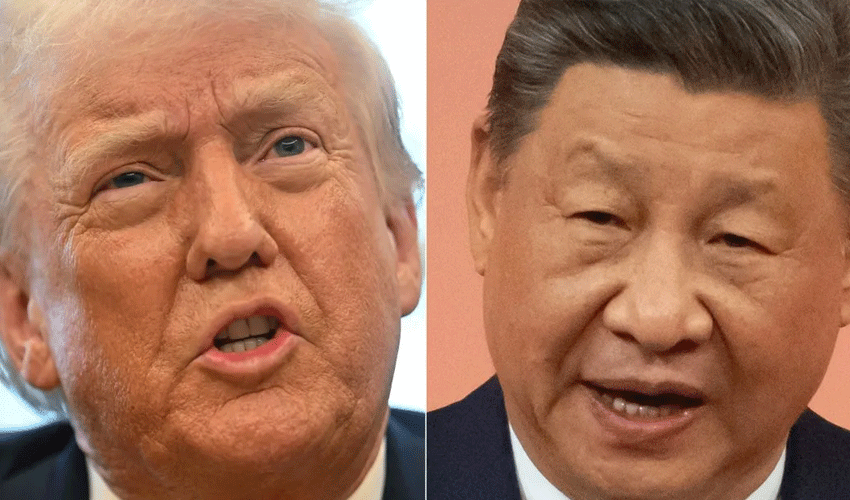
The United States and China have hailed “significant progress” in trade negotiations held in Malaysia, fueling optimism that Presidents Donald Trump and Xi Jinping will finalize a deal to de-escalate their trade war when they meet later this week in South Korea.
The weekend discussions, held on the sidelines of the ASEAN Summit, concluded with both sides signaling that a framework for an agreement is ready. Trump and Xi are expected to meet on Thursday during the APEC Summit in Gyeongju, marking their first in-person encounter since 2019 — and Trump’s return to the White House.
US Treasury Secretary Scott Bessent said the teams had crafted a framework “for Trump and Xi to discuss in South Korea,” indicating that the final agreement may involve concessions on tariffs and export controls.
Framework targets rare earths, agricultural trade
In interviews with NBC News and ABC News, Bessent said he expects the deal to prevent China from implementing export controls on rare earth materials — vital for global tech manufacturing — and to avert the 100% tariff Trump had threatened on Chinese imports.
He added that Beijing agreed to make “substantial” purchases of US agricultural products, saying the move would make “American soybean farmers feel very good.”
Chinese Vice Premier He Lifeng, the country’s top trade negotiator, confirmed that both sides reached “a basic consensus” and agreed to “finalize specific details” and begin domestic approval procedures, according to a statement from China’s Ministry of Commerce.
Asian financial markets reacted positively to the diplomatic progress. Japan’s Nikkei 225 rose 2.1%, South Korea’s KOSPI jumped 2.3%, and Hong Kong’s Hang Seng gained 0.85% by midday on Monday, reflecting renewed investor confidence.
The rally highlights growing optimism that the world’s two largest economies may finally move past years of tariff battles that have disrupted global supply chains.
Trump’s Asia tour and strategic positioning
After wrapping up the ASEAN Summit, Trump departed Malaysia on Monday for Japan, where he is scheduled to meet newly sworn-in Prime Minister Sanae Takaichi. He will then travel to South Korea on Wednesday for the anticipated meeting with Xi.
Trump’s administration has been known for its aggressive tariff policies, imposing high duties on nearly all major trade partners. However, the president has reserved his most stringent measures for China, citing concerns about intellectual property and trade imbalances.
Earlier this month, Beijing announced new export licensing rules for rare-earth magnets and semiconductor materials that use Chinese technology or raw minerals. The regulations, set to take effect on December 1, prompted fears of global supply chain disruptions, given that rare earths are critical for manufacturing smartphones, electric vehicles, and military equipment.
Trump swiftly responded with a threat to impose a 100% tariff on all Chinese goods starting November 1. Analysts described the exchange as a tactical move by both sides to gain leverage ahead of this week’s summit.