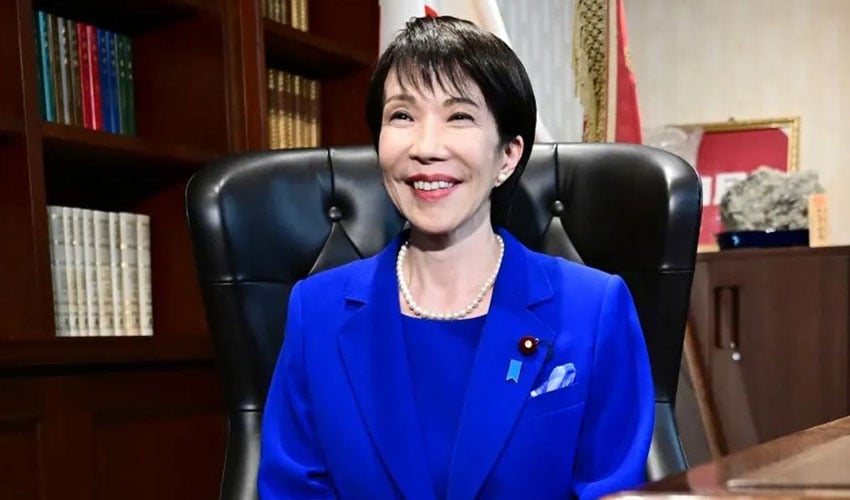
Japan made history on Tuesday as Sanae Takaichi was elected the country’s first female prime minister, following a decisive victory in parliament’s lower house.
The 63-year-old conservative leader, long seen as a political disciple of former Prime Minister Shinzo Abe, won 237 votes in the 465-seat chamber, marking a turning point in Japan’s male-dominated political landscape.
Takaichi’s rise to power comes after months of political upheaval within the ruling Liberal Democratic Party (LDP). Her victory follows the party’s coalition deal with the right-wing Japan Innovation Party (Ishin), which helped secure the majority needed to form a new government.
While her appointment represents a historic moment for gender equality in Japanese politics, analysts say it also marks a shift toward hardline policies on immigration and social issues. Japan, which has long grappled with economic stagnation, is now facing inflationary pressures that have stirred public frustration and bolstered opposition groups, including the far-right Sanseito party.
From heavy metal drummer to Japan’s top office
Born in Nara Prefecture in 1961, Takaichi had little connection to politics growing up. Her father worked in an office, and her mother served as a police officer. Before entering politics, she was known for her passion for heavy metal drumming — famously carrying multiple drumsticks because she often broke them during intense performances.
Her political awakening came during the 1980s amid growing U.S.-Japan trade tensions. In 1996, she won her first parliamentary seat with the LDP, beginning a career marked by loyalty to conservative values and national pride. Since then, Takaichi has served as an MP ten times, losing only once, and earned a reputation as one of the LDP’s most outspoken right-wing figures.
After two failed bids, she finally succeeded in becoming the LDP’s leader earlier this month, paving her path to the top office.
Timeline: How Japan reached this turning point
Japan’s ruling party has endured a turbulent political journey over the past two years:
14 December 2023: Four ministers in then-Prime Minister Fumio Kishida’s cabinet resigned amid a fundraising scandal.
August 2024: Kishida announced he would not seek re-election as LDP leader.
September–October 2024: Shigeru Ishiba took over as party leader and prime minister but quickly called a snap election.
27 October 2024: The LDP and its coalition partner Komeito lost their lower house majority for the first time since 2009.
20 July 2025: The coalition lost its majority in the upper house as well.
7 September 2025: Ishiba stepped down following mounting political pressure.
3 October 2025: Sanae Takaichi was elected as the new LDP leader.
10 October 2025: Komeito exited the coalition over ideological disagreements.
20 October 2025: Takaichi secured a new alliance with the right-wing Japan Innovation Party.
Takaichi’s confirmation as Japan’s 104th prime minister will be finalized after approval from the less powerful upper house later on Tuesday. She succeeds outgoing Prime Minister Shigeru Ishiba, who resigned last month following a string of electoral defeats.
Despite the symbolic breakthrough of becoming Japan’s first female leader, Takaichi’s tenure is expected to be defined less by gender equality and more by her conservative agenda. Observers anticipate tougher stances on immigration, social welfare, and national defense — policies that may reshape Japan’s domestic and foreign posture in the months to come.