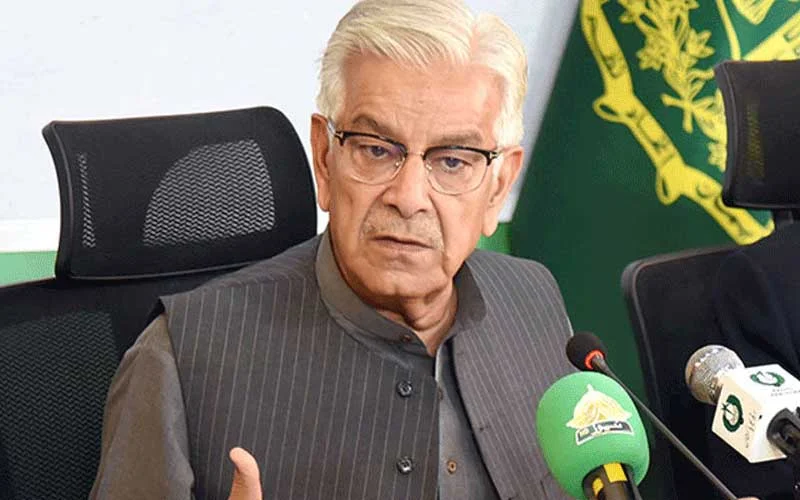
Defence Minister Khawaja Asif has confirmed that the Afghan Taliban regime has agreed to three major conditions under the Pakistan-Afghanistan ceasefire agreement, including ending patronage of the banned Tehreek-e-Taliban Pakistan (TTP), maintaining a ceasefire, and ensuring the return of Afghan refugees.
Speaking on private TV channel talk shows, Asif said the agreement aims to restore lasting peace in the region, with full details expected to be revealed on October 25.
Key points of Pakistan-Afghanistan agreement
According to Khawaja Asif, the Afghan Taliban government has agreed on three key and fundamental clauses in the recently signed peace agreement. These include:
- Ending the TTP’s patronage and activities within Afghanistan.
- Maintaining a long-term ceasefire along the border.
- Facilitating the dignified return of Afghan refugees to their homeland.
The minister said the agreement, which was mediated by Qatar and Turkiye, reflects both nations’ desire for stability. “Qatar and Turkiye want peace to prevail in Pakistan,” he added.
Asif also noted that the agreement will remain confidential, and the complete details will be shared publicly only after the second phase of talks, scheduled in Turkey later this month.
Ceasefire conditional on TTP’s neutralization
Khawaja Asif cautioned that the ceasefire agreement hinges on Afghanistan’s commitment to end support for the TTP. “If there is another infiltration, there is a risk of the ceasefire agreement being broken,” he warned.
He explained that Islamabad has made it clear to Kabul that TTP’s presence and operations inside Afghanistan are unacceptable.
“We have told the Afghan Taliban regime that they have such and such people in their territory, and they know that we have the evidence,” Asif said, adding that Pakistan is ready to present this evidence during the upcoming meeting in Istanbul if needed.
Talks held with Taliban, not TTP
Asif clarified that Pakistan’s negotiations were solely with the Afghan Taliban, not with the banned TTP. “The TTP is the killer of our children, and we will not talk to them under any circumstances,” he asserted.
He criticized the founder of PTI for previously engaging with the banned group, saying, “The PTI founder used to talk to them, but we will never do so.”
The defence minister stressed that Pakistan’s stance on terrorism is uncompromising, and the government’s top priority is national security and protection of citizens.
Atmosphere of talks and upcoming negotiations
Khawaja Asif described the Doha talks as cordial, noting that “there was no bitterness in the atmosphere.” He said both sides demonstrated goodwill and a desire to restore peace and trust across the border.
He confirmed that the second phase of negotiations will be held in Turkiye, possibly on October 25, 26, or 27, depending on scheduling. “If the agreement is violated, both brotherly countries will be informed,” Asif said, emphasizing the mutual accountability clause in the accord.
Afghan refugee repatriation included in accord
As part of the agreement, the repatriation of Afghan refugees has been included as a structured process. “We hosted the Afghans with honour, and now we are sending them off with honour,” Khawaja Asif said, reaffirming that Pakistan’s approach will remain humane and dignified.
He added that the refugee return process will be conducted in coordination with Afghan authorities and international organizations to ensure stability and respect for humanitarian principles.
India’s role and Pakistan’s stance on regional security
Addressing questions about Afghanistan’s ties with India, Khawaja Asif said, “If the Afghan Taliban regime has relations with India, we have no objection.” However, he made it clear that India is actively supporting the TTP, calling it an undeniable fact.
“There is no doubt that India is supporting the TTP,” Asif asserted, reiterating Pakistan’s concerns over India’s role in regional terrorism.
Second round to define future framework
Khawaja Asif concluded that the true picture of the agreement’s future will emerge after the next round of talks in Turkiye. He expressed optimism that the Afghan Taliban regime will honour its commitments, especially regarding the TTP issue and ceasefire compliance.
“The success of this agreement depends on sincerity and implementation,” Asif said, emphasizing that peace in Pakistan and Afghanistan is interlinked and essential for the stability of the entire region.