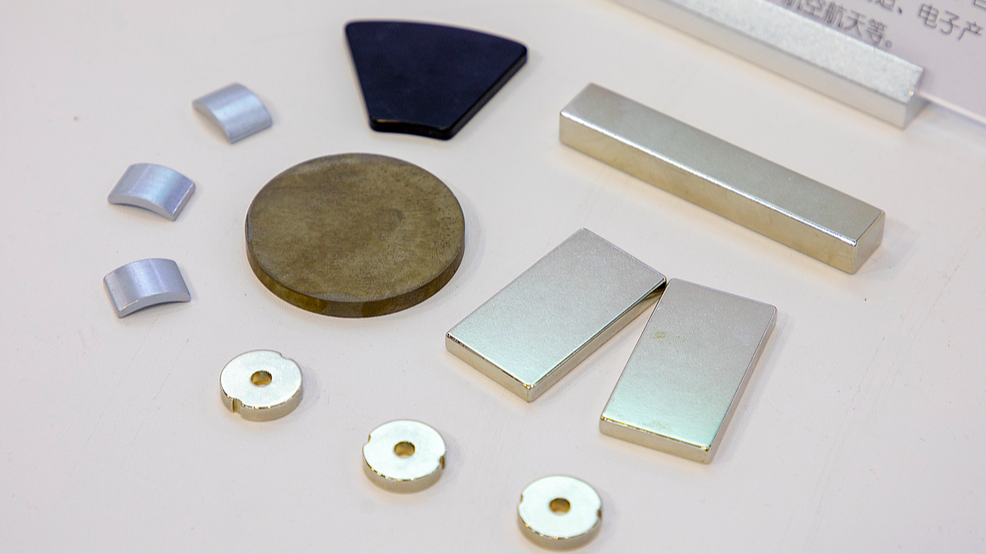
Rare earths are critical strategic resources due to their unique and irreplaceable properties, playing an essential role in both civilian and military applications. Last week, China announced it will impose export control measures on certain rare earth items and technologies, a move that has attracted international attention. This explainer outlines the reasons and rationale behind these controls, based on remarks from the Ministry of Commerce.
In line with international practices
Rare earth-related items have significant dual-use characteristics, vital in both civilian and military applications. Imposing export controls on such items is a commonly adopted practice internationally.
As a responsible major country, China always firmly safeguards its national security and international common security, always takes a just and reasonable principled position and implements export control measures in a prudential and moderate manner.
Before introducing these controls, China had made a thorough assessment of the measures’ possible impact on industrial and supply chains and is certain that the related impact is very limited. The country has also in advance notified relevant countries and regions through bilateral export control dialogue mechanisms.
A legitimate action to protect global peace
The announcement of export control measures is a legitimate action by the Chinese government to refine its export control system in accordance with laws and regulations.
In April of this year, China had already implemented export controls on seven categories of rare earth items with dual use properties. Related technologies were included in China’s Catalog of Technologies Prohibited and Restricted for Export as early as 2001. Relevant exports are subject to legal procedures.
For some time, certain foreign organizations and individuals have directly or after processing transferred or provided rare earth items originating from China to relevant organizations and individuals, for direct or indirect use in sensitive fields such as military applications, which has caused significant damage or posed potential threats to China’s national security and interests, adversely affected international peace and stability, and undermined global non-proliferation efforts.
In response to these concerns, China employs export controls on related items according to the law, in order to better defend world peace and regional stability, and to fulfill non-proliferation and other international obligations.
Controls not bans
It is important to emphasize that China’s export controls are not export bans. The scope of these measures is limited, and multiple facilitation mechanisms for licensing will be introduced.
Eligible export license applications will receive approval, while exports intended for humanitarian purposes, such as emergency medical care, responses to public health incidents, and natural disaster relief, will be exempt from licensing requirements.
In addition, China has established a reasonable transition period to address the practical needs of stakeholders in fulfilling existing commercial contracts and meeting compliance obligations.
Support for compliant civil exports
Moving forward, China will review export applications in line with relevant laws and regulations, granting licenses for eligible civil applications. The government will also consider the use of facilitation measures, such as general licenses and license exemptions, to support legitimate trade.
“I want to emphasize that China’s export controls are not export bans. All applications for compliant export for civil use can get approval, so that relevant businesses have no need to worry. The Chinese government will work with all countries, as always, to firmly safeguard world peace and stability in neighboring regions, and jointly maintain the stability of global industrial and supply chains,” said a spokesperson of the Commerce Ministry.