As a fragile ceasefire took effect on Friday, tens of thousands of displaced Palestinians began returning to their homes in northern Gaza—many finding the once-bustling city almost unrecognizable after weeks of intense Israeli bombardment.
The truce, brokered under a broader international initiative, comes amid mounting humanitarian needs and uncertainty over Gaza’s future governance.
Palestinian groups assert sovereignty over Gaza
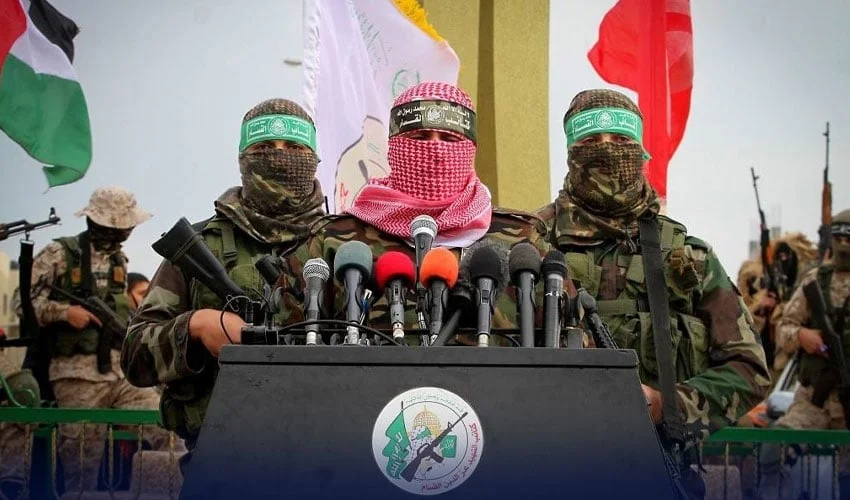
In a joint statement, Hamas, the Palestinian Islamic Jihad, and the Popular Front for the Liberation of Palestine (PFLP) reaffirmed that the governance of Gaza must remain a “purely internal Palestinian matter.”
“We renew our rejection of any foreign guardianship,” the statement said, stressing that decisions regarding Gaza’s administration should be made solely by Palestinians.
The factions announced plans for an “urgent comprehensive national meeting” aimed at unifying the Palestinian position, rebuilding institutions, and establishing a shared strategy for the post-ceasefire phase.
It remains unclear, however, whether Fatah—the ruling faction of the Palestinian Authority—will take part in the discussions.
The ceasefire’s initial phase reportedly aligns with a 20-point plan proposed by U.S. President Donald Trump, which includes the creation of a new international body, the “Board of Peace,” to oversee a temporary technocratic government in Gaza.
While both Israel and Hamas agreed to the truce, the future governance of Gaza remains uncertain. The factions’ statements make clear their opposition to any external intervention in Gaza’s political or administrative affairs.
Humanitarian provisions and captive releases
Al Jazeera obtained details of the ceasefire agreement, which require Hamas to release Israeli captives within 72 hours—without public celebrations or media coverage.
The accord also mandates the daily entry of at least 600 aid trucks into Gaza, restoration of key water facilities, and the creation of emergency camps to house displaced residents.
The Gaza Civil Defence reported recovering 63 bodies from the streets of Gaza City following the truce’s enforcement, while thousands more remain missing under the rubble.
Al Jazeera correspondent Hani Mahmoud described the city’s condition as one of “near-total destruction,” saying the main coastal road leading into Gaza City was lined with shattered buildings and debris.
Calls for reconstruction and rubble removal
Later on Friday, Gaza’s Government Media Office underscored the need for a comprehensive reconstruction plan, noting that the first phase of the truce allows for the import of heavy machinery to clear debris—a crucial step toward rebuilding the war-torn enclave.
Under the deal, UN agencies and international humanitarian organizations will coordinate the aid distribution, sidelining the controversial Gaza Humanitarian Fund (GHF), which had been accused of operating in dangerous conditions.
Human rights groups previously labeled the GHF’s mechanism a “death trap,” after hundreds of Palestinians were killed while attempting to access its aid points within Israeli-controlled zones.
Despite the criticism, GHF announced it will continue operations.
“GHF’s team on the ground continues to provide humanitarian aid and food to all those who need it,” Executive Director John Acree said in a statement. “We will not rest so long as there are Gazans in need.”