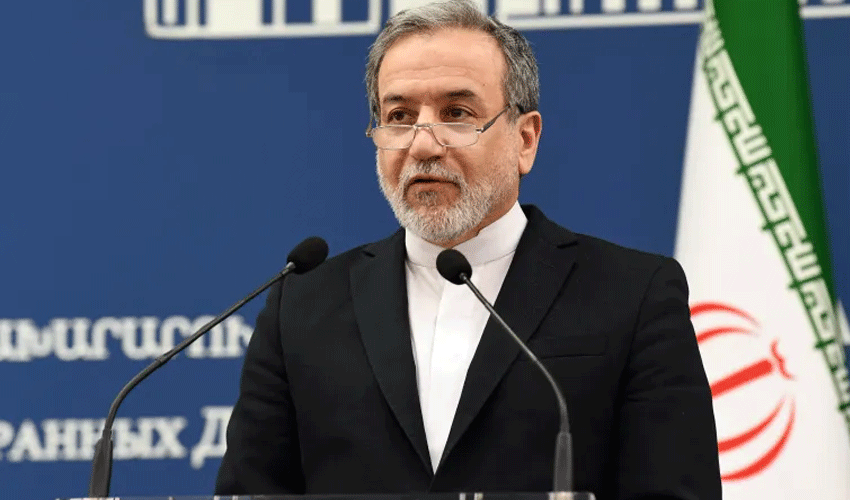
Iran’s foreign minister Abbas Araghchi announced on Sunday that Tehran’s cooperation with the UN’s International Atomic Energy Agency (IAEA) is “no longer relevant” following the reinstatement of international sanctions by European powers.
“The Cairo agreement is no longer relevant for our cooperation with the IAEA,” Araghchi said, referring to a deal signed last month that aimed to restore monitoring and inspections of Iran’s nuclear facilities.
That framework was negotiated after Iran suspended cooperation in June, following Israeli and U.S. attacks on its nuclear and military sites.
Europe triggers ‘snapback’ sanctions
The announcement came days after Britain, France, and Germany invoked the snapback mechanism under the 2015 Joint Comprehensive Plan of Action (JCPOA) — reimposing UN sanctions against Iran. The three nations accused Tehran of violating its nuclear commitments, a charge Iran strongly rejects.
“The three European countries thought they had leverage in their hands, threatening to implement a snapback,” Araghchi told diplomats in Tehran. “Now they have used this lever and seen the results. They have definitely diminished their role and almost eliminated the justification for negotiations with them.”
Iran accuses IAEA of double standards
Iran has accused the IAEA of applying double standards and failing to condemn repeated Israeli strikes on Iranian nuclear facilities, despite its obligations under the Nuclear Non-Proliferation Treaty (NPT).
Western governments, led by the United States and backed by Israel, have long claimed that Iran seeks to develop nuclear weapons — allegations Tehran has consistently denied. Iranian officials insist their nuclear programme is entirely civilian, emphasizing their legal right to enrich uranium under the NPT.
Calls for NPT withdrawal surface
Some Iranian lawmakers have called for the country to withdraw from the NPT altogether in response to what they describe as Western hypocrisy. However, President Masoud Pezeshkian has reaffirmed that Iran remains committed to its treaty obligations for now.
Araghchi hinted that Tehran’s final decision on future cooperation with the IAEA will be announced soon but left open the possibility of renewed diplomacy, saying, “There is still room for diplomacy.”
Efforts to revive broader nuclear negotiations between Tehran and Washington, which began in April, collapsed after Israeli attacks in June targeted Iranian nuclear, military, and residential facilities.
Iran accused the U.S. of sabotaging diplomacy and demanded security guarantees and recognition of its right to peaceful nuclear development before any future talks.