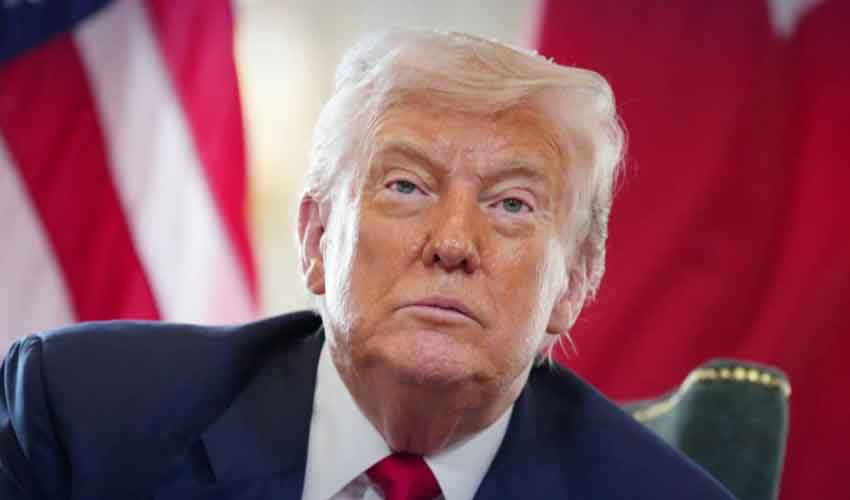
US President Donald Trump has urged mediators to “move fast” as high-stakes peace talks aimed at ending the Gaza war begin in Egypt. The negotiations bring together delegations from Israel and Hamas for indirect discussions over Trump’s proposed 20-point ceasefire plan.
Trump said the talks had been “very successful” so far and that the first phase “should be completed this week.” He warned, however, that “time is of the essence or massive bloodshed will follow,” emphasizing the urgency of achieving an agreement.
Hamas softens stance on key points
Hamas has agreed to several provisions in the U.S. peace plan, including freeing hostages and transferring Gaza’s administration to a transitional committee of Palestinian technocrats. However, the group’s response omitted references to its disarmament or future political role — key Israeli and U.S. demands.
A senior Palestinian official told the BBC that mediators from Egypt, Qatar, and Turkiye persuaded Hamas to tone down its objections and reserve contentious issues — such as weapons, governance, and security arrangements — for later negotiation.
Observers see Hamas’s move as a tactical concession that reflects both internal pressure and diminishing leverage after nearly two years of conflict.
Israel continues strikes despite ceasefire push
Despite calls from Trump and other international leaders to halt hostilities, Israel continued its military campaign in Gaza over the weekend.
Gaza’s Hamas-run health ministry said at least 65 people were killed in the past 24 hours, with Israeli air and ground operations targeting Gaza City and central areas.
Israeli government spokesperson Shosh Bedrosian confirmed that “certain bombings have stopped inside Gaza” but stressed there was “no ceasefire in place.” She said Prime Minister Benjamin Netanyahu had authorized “defensive strikes” against perceived battlefield threats.
BBC reporters stationed near the border in Kibbutz Be’eri said they witnessed fresh explosions and heavy plumes of smoke rising from Gaza early Sunday.
Trump’s 20-point peace plan gains momentum
The U.S.-brokered proposal, which Trump describes as “a great deal for Israel and the entire Muslim world,” calls for:
An immediate end to fighting.
The release of 48 hostages, including 20 believed to be alive.
Israel’s military pullback to its August “yellow line” positions.
Negotiations on post-war governance led by Palestinian technocrats.
U.S. special envoy Steve Witkoff, Trump’s son-in-law Jared Kushner, and Qatari Foreign Minister Sheikh Mohammed bin Abdulrahman Al Thani are attending the Cairo meetings. Netanyahu has also dispatched Israel’s top negotiator Ron Dermer, while Hamas’s delegation is headed by Khalil al-Hayya, who survived an Israeli assassination attempt last month.
Netanyahu said he expected “the release of hostages in the coming days,” adding that the talks would be “confined to a few days maximum.”
Arab states welcome Hamas’s flexibility
In a rare show of regional unity, the foreign ministers of Egypt, Jordan, Indonesia, Pakistan, Qatar, Saudi Arabia, Turkiye, and the UAE issued a joint statement welcoming Hamas’s steps toward implementing the Trump plan.
They also supported Trump’s call for Israel to “immediately stop the bombing” and begin executing the exchange deal. The ministers “expressed appreciation for his commitment to establishing peace in the region,” according to the statement.
Senior Hamas leader Izzat al-Risheq hailed the Arab support as “important backing” that could improve chances of a lasting ceasefire.
Civilian toll continues to mount
The humanitarian situation in Gaza remains dire. According to Gaza’s Government Media Office, over 2,700 families — totaling more than 8,500 people — have been wiped off the civil registry since the war began.
Casualties include 1,015 infants, 1,670 medical workers, 254 journalists, and 140 civil defense personnel.
U.S. Secretary of State Marco Rubio acknowledged the war “has not yet ended” but said the talks represent “the closest we’ve come to getting all hostages released.”
Rubio emphasized that “you can’t release hostages in the middle of strikes,” urging Israel to halt bombings to allow humanitarian and negotiation efforts to proceed.