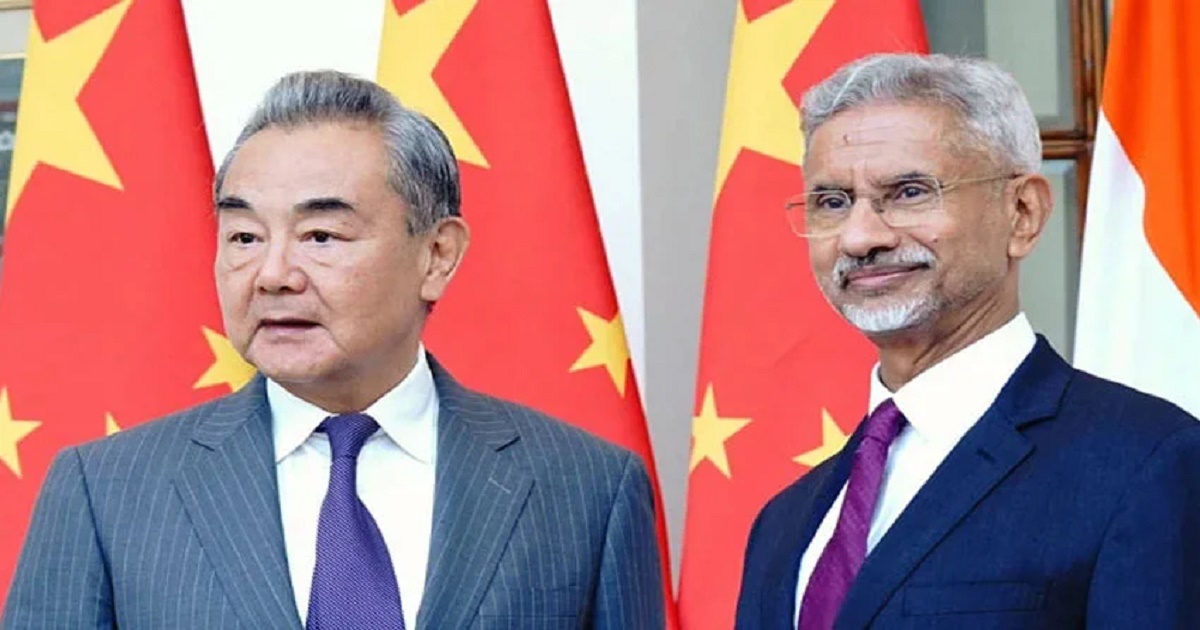
China has called on India to establish a “correct strategic understanding” of bilateral ties and view Beijing as a partner rather than a rival, Foreign Minister Wang Yi told his Indian counterpart Subrahmanyam Jaishankar during talks in New Delhi on Monday.
According to the Chinese foreign ministry’s readout, Wang said Beijing was ready to uphold the principle of cordiality and mutual benefit with New Delhi. The two ministers discussed a range of issues including border peace, trade, pilgrimages, people-to-people exchanges, connectivity, and river data sharing.
“We had productive conversations on our economic and trade issues, pilgrimages, people-to-people contacts, river data sharing, border trade, connectivity and bilateral exchanges,” Jaishankar told reporters. He added that the discussions would contribute to building a stable and forward-looking relationship.
Restoring dialogue after years of strain
The Chinese readout noted that dialogue at all levels between the two sides had been “gradually restored” after a prolonged period of tensions following the 2020 Himalayan border clash that left 20 Indian and four Chinese soldiers dead.
Wang stressed that as major developing nations, China and India should set an example by working together rather than treating each other as “threats.”
Jaishankar, in his opening remarks, underlined that resolving border issues remained crucial. “Having seen a difficult period in our relationship, our two nations now seek to move ahead. This requires a candid and constructive approach from both sides,” he said.
Significance of Wang’s visit
Wang’s two-day trip comes just days before Indian Prime Minister Narendra Modi is scheduled to travel to China — his first visit in seven years — to attend the Shanghai Cooperation Organisation (SCO) summit, alongside leaders from Russia and other regional powers.
During his stay, Wang will also hold the 24th round of border talks with Indian National Security Adviser Ajit Doval and meet Prime Minister Modi.
Relations between the Asian neighbours began to thaw in October 2024 after Modi and Chinese President Xi Jinping met in Russia and agreed to scale back troops along the disputed Himalayan frontier.
Still, both sides maintain significant deployments along their contested border, with analysts warning that sustained diplomatic engagement will be key to preventing further escalation.