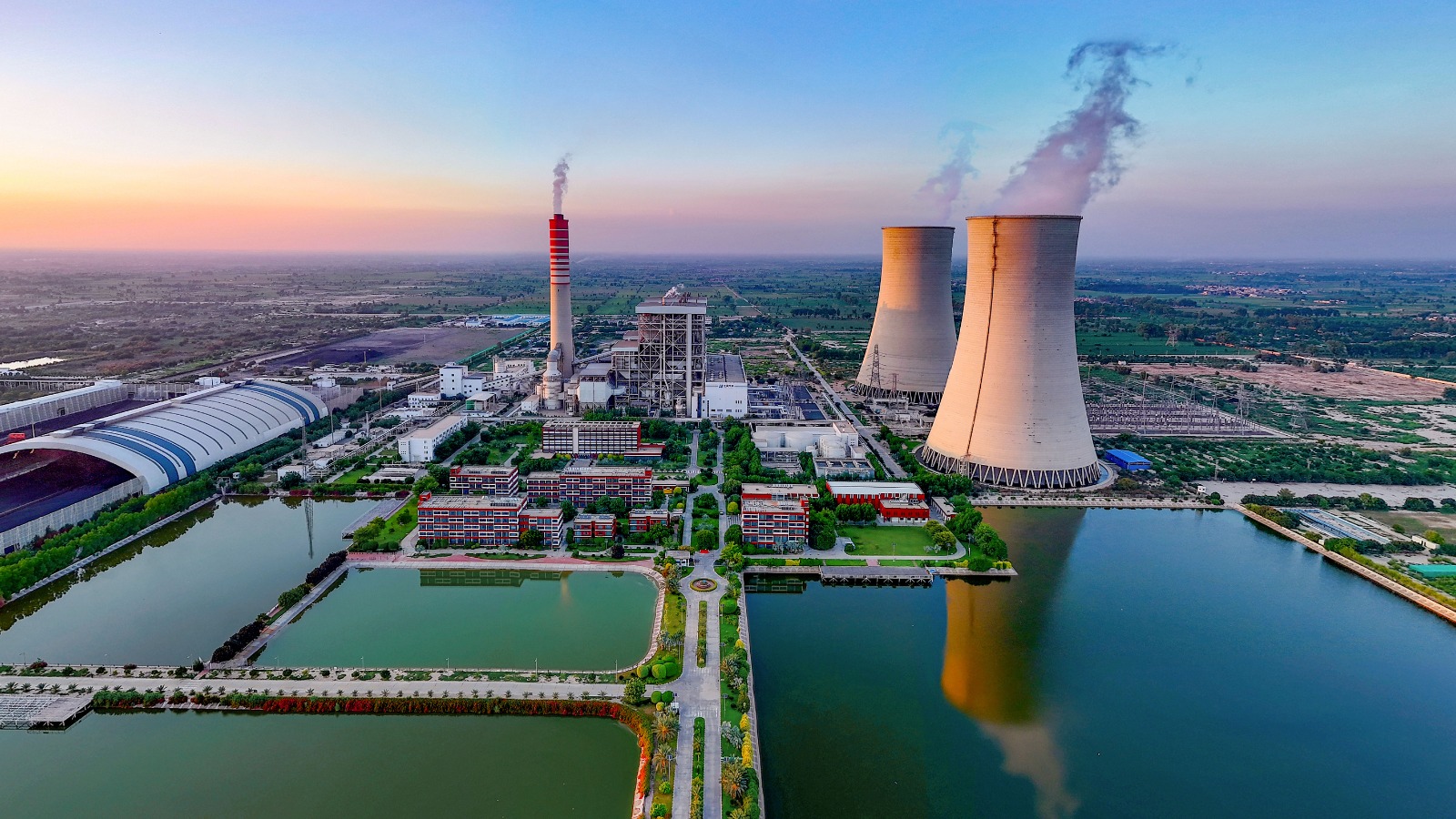
Sahiwal Coal Power Plant under China Pakistan Economic Corridor (CPEC)
Ten years ago, on July 31, 2015, a patch of farmland between Sahiwal and Okara became the launchpad for one of Pakistan’s most consequential energy projects. In just twenty-two months, an astonishing timeline for a utility scale thermal station, two 660 megawatt supercritical units rose from the ground, synchronized, and entered commercial operation in 2017, bringing a combined 1,320 MW onto the grid well ahead of schedule. That sprint from groundbreaking to generation set the tone for everything that followed: precision in execution, discipline in operations, and a commitment to national service.
The Sahiwal Power Plant’s origin story is as much about engineering bravery as it is about logistics and organization. Supercritical boilers, advanced turbines, and a tightly integrated balance of plant were specified and delivered in record time, with construction management that compressed milestones without compromising safety or quality.
In 2017, May and June, both units were completed and put to work; by July 3, 2017 the station had moved into full operations, adding a firm baseload wedge that the country had badly needed. Seen against the chronic shortfalls of the mid 2010s, that moment mattered: Sahiwal’s rapid delivery translated directly into fewer hours of load shedding and a stronger foundation for industry, agriculture, and everyday life.
What has distinguished Sahiwal ever since is the drumbeat of consistency. Year after year, the plant has met its obligations to the national grid, earning a reputation for dependable output and steady availability. Capacity tests, the crucible where numbers must trump narratives, have repeatedly validated this performance. In 2025, during a rigorous six-hour full load trial, Sahiwal exceeded its Annual Capacity Test benchmark, delivering 1,252.03 MW against a requirement of 1,243.517 MW, with results observed by market and grid bodies.
From the beginning, Sahiwal’s technology choices set it apart in Pakistan’s thermal fleet. The station employs two supercritical units, higher temperature and pressure, higher efficiency, lower fuel burn per kilowatt hour, paired with a suite of environmental controls. Electrostatic precipitators capture particulate matter, flue gas desulfurization converts SO₂ to gypsum in wet scrubbers, low NOx combustion trims nitrogen oxides at the burner, and continuous emissions monitoring verifies performance in real time. Independent monitoring and public statements over the years have consistently affirmed that the plant meets or outperforms national standards, and aligns with international benchmarks associated with responsible coal generation. None of this happens by accident; it happens because the environmental equipment is treated as mission critical.
The operational culture at Sahiwal blends the rigor of OEM playbooks with a localization ethos that has matured over the decade. Early cohorts of Pakistani engineers were sent for advanced training in China; today, more than 70% of the workforce is Pakistani, and that share continues to rise as skill transfer compounds and new technicians graduate from dedicated training programs. Walk the plant today and you’ll find control room shifts led by Pakistani supervisors, maintenance outages planned and executed by local planners and crafts, and optimization projects conceived by teams who now know the units as well as their original commissioning engineers. Localization here is not a slogan, it is an operating reality that reduces response time, improves institutional memory, and builds national technical capital.
Big power plants are judged not only by their megawatts but by the way they sit in the landscape and serve the people around them. Sahiwal’s story on this front is tangible. During construction, thousands of local workers found jobs; in operations, the supply chain that keeps a 1.3 GW station humming, transport, materials, services, catering, maintenance, has fed a wide circle of SMEs and contractors. Roads improved, small markets grew, and household incomes in surrounding villages found a steadier footing. There is a multiplier effect when paychecks are stable and predictable, and the past decade has seen that effect ripple outward from the plant’s gates.
Environmental stewardship on a coal site is often talked about and less often implemented; Sahiwal has worked to make it visible. Real time emissions monitoring and periodic third-party testing have underpinned the claim that the station operates within strict limits. The flue gas path, from boiler to ESP to absorber tower, has been kept at 100% availability targets, reflecting a philosophy that clean operation is not a nice to have but a condition of running. This discipline has allowed the plant to position itself as a responsible neighbor to the canal irrigated fields that surround it.
The headline achievements, record time construction, strong capacity tests, verified emissions control, are matched by subtler markers of excellence. Consider the practice of preventive maintenance: supercritical units are unforgiving if you cut corners, so Sahiwal’s teams have leaned into predictive diagnostics, from vibration analyses to thermal performance trending. Each annual outage is choreographed weeks in advance with materials staged, scaffolding plans optimized, and work packs tied to lessons learned from prior years. The result is a site where uninterrupted supply is not hyperbole but the net effect of thousands of small, disciplined decisions.
Equally important is the human arc behind the machinery. Engineers who arrived as graduates in 2016 now lead troubleshooting on the DCS, coordinate with grid operators on reactive power support, and mentor fresh hires. Technicians who once shadowed Chinese specialists now sign off on work permits, close tickets in the CMMS, and own the quality of their craft. Localization does not mean isolation; the partnership with Chinese counterparts remains a strength, enabling joint upgrades, software patches, and fleet wide learnings to be brought to bear. But the center of gravity has shifted toward Pakistani leadership, and with it the confidence to set higher marks for availability, heat rate, and auxiliary power.
What does a decade of Sahiwal mean for Pakistan’s energy narrative? First, that speed and quality can coexist. The myth that fast projects must be fragile was debunked when both units entered service in under two years and then settled into a rhythm of reliable generation. Second, that environmental performance is a controllable variable when the right systems are installed and maintained as non-negotiables. Third, that knowledge transfer is real when designed intentionally: structured training, clear career ladders, and a willingness to hand over the keys. Finally, that anchor assets can lift the communities around them, not by slogans, but by contracts, payrolls, roads, and predictable economic activity.
The plant’s most recent ACT result, again overperforming its benchmark, offers a fitting metaphor for its tenth year: a mature facility still finding ways to shave losses, improve heat rate, and deliver more than promised. It is the sort of performance that does not announce itself with fireworks, but with a steady frequency and voltage on the grid, with turbines that spin precisely at 3,000 rpm, with a dispatch center that knows Sahiwal will do exactly what it says on the tin.
As Pakistan debates the shape of its future energy mix, how fast to grow renewables, how best to modernize transmission, how to balance affordability with security, Sahiwal Coal Power Plant stands as a decade long case study in execution. It shows that when contracts are clear, financing is firm, engineering is first rate, and operations are held to transparent tests, large assets can deliver national value far beyond their nameplate. The next ten years will bring fresh challenges: evolving emissions standards, digitalization of maintenance, potential retrofits for efficiency, and market reforms that will reward flexibility.
In the end, the story of Sahiwal Coal Power Plant is not a single headline but a pattern: promises made, and then exceeded; standards set, and then internalized; skills borrowed, and then owned. From the first pile driven in 2015 to the latest capacity test in 2025, the plant has been a lesson in how to build, how to operate, and how to grow together. It has become a quiet emblem of what excellence in Pakistan’s power sector can look like.