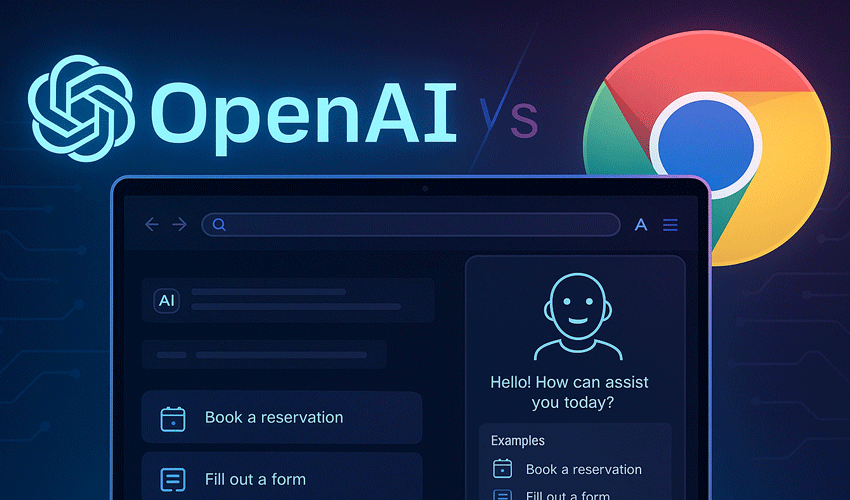
OpenAI is preparing to launch its own artificial intelligence-powered web browser in the coming weeks, in a direct challenge to Google Chrome’s dominance in the global browser market, according to sources familiar with the development.
The move signals OpenAI’s broader ambition to expand its footprint beyond chatbots and into the infrastructure of how people interact with the internet. The browser, which is reportedly built atop Google’s open-source Chromium platform, is designed to incorporate ChatGPT-like functionality into a native interface—offering users a fundamentally different browsing experience powered by AI.
According to three individuals briefed on the project, the browser is expected to offer features that allow users to interact with the internet via a chat-based interface, reducing the need to navigate traditional websites. The product will also serve as a platform for OpenAI’s growing portfolio of AI “agents,” capable of performing tasks such as booking appointments or filling out forms on behalf of users.
If widely adopted, particularly among ChatGPT’s 500 million weekly active users, the browser could disrupt Google’s lucrative advertising model. Chrome currently plays a critical role in Alphabet’s ad business, which accounts for nearly three-quarters of the company’s overall revenue. By capturing user data and routing search traffic to Google’s engine, Chrome has helped Alphabet maintain its stronghold on digital advertising.
Strategic expansion
The browser project forms part of a wider strategy by OpenAI to integrate its AI technologies into the everyday digital habits of consumers and businesses. Earlier this year, the company announced its foray into hardware, acquiring the AI device startup “io” for $6.5 billion—a venture led by Apple’s former design chief, Jony Ive.
Industry observers say that controlling a browser will allow OpenAI to collect richer user data and better integrate its AI models, including its Operator tool and other autonomous agents.
“Unlike a plugin or extension, owning the browser infrastructure gives OpenAI direct access to user interactions and behavioural insights, which are invaluable for refining AI systems,” said a tech industry analyst familiar with the development.
The browser will enter a competitive space already populated by similar offerings. AI startup Perplexity recently unveiled an AI browser called Comet, while companies like Brave and The Browser Company have also launched AI-integrated browsing tools.
Tough road ahead
Despite OpenAI’s momentum, it faces an uphill battle. Chrome holds more than two-thirds of the global browser market, serving over three billion users, according to web analytics firm StatCounter. Apple’s Safari follows with a distant 16 percent share.
Still, OpenAI’s growing user base and enterprise traction—3 million businesses now reportedly subscribe to ChatGPT’s paid services—could provide a strong foundation for the browser’s initial adoption.
The initiative has also benefited from high-profile hires, including two former Google vice presidents who were instrumental in building Chrome. While The Information had earlier reported that OpenAI considered acquiring Chrome outright, a company executive revealed in April that OpenAI would be open to such a purchase if regulators compelled Google to divest the browser.
So far, Alphabet has resisted any such move, stating it would appeal a U.S. court ruling that found the company held an unlawful monopoly in online search. The ruling has placed additional scrutiny on the role Chrome plays in Google’s data and advertising dominance.
Data, control, and future of browsing
For OpenAI, the decision to build an independent browser rather than relying on existing platforms reflects a clear intention: to gain control over data pipelines and provide seamless integration of AI into daily web activities.
While the exact release date remains undisclosed, sources indicate that a public debut is imminent.
As the AI arms race intensifies, OpenAI’s browser marks a pivotal attempt to reimagine web browsing—not just as a tool for viewing content, but as a collaborative digital assistant that navigates the internet on behalf of its users.