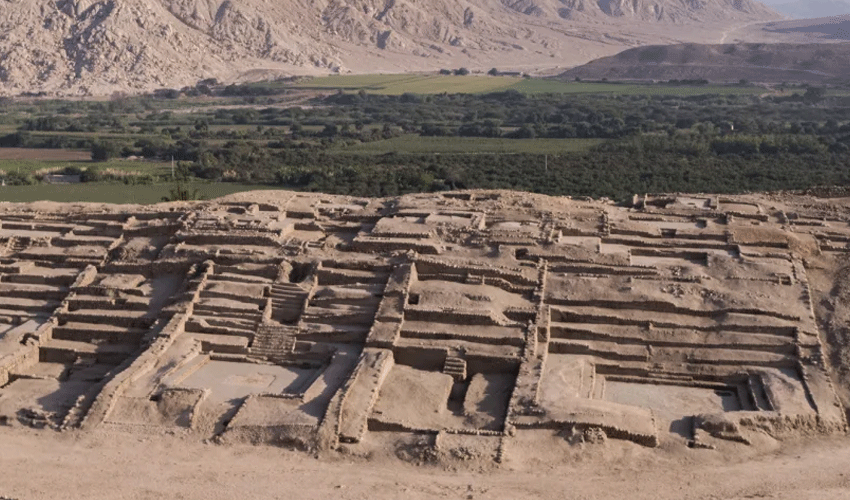
Archaeologists in Peru have unveiled the ancient city of Peñico, a 3,000-year-old urban centre believed to have served as a crucial hub for trade and cultural exchange between the coast, the Andes and the Amazon.
Located in the Huaura province north of the capital Lima, Peñico was officially opened to the public last week, the country’s Ministry of Culture said in a statement. The announcement follows eight years of archaeological excavation and conservation work at the site.
Experts say the city, founded around 1800 BCE, played a strategic role in connecting coastal communities of the Supe Valley with Andean highland and Amazonian settlements. It was constructed approximately 600 metres above sea level, which enabled access to diverse ecological zones.
“This urban centre developed following the cultural tradition of the Caral,” said Ruth Shady, lead researcher and director of the Caral Archaeological Zone (ZAC), which functions under Peru’s Ministry of Culture.
Shady noted that Peñico emerged as an important settlement after the decline of Caral – one of the oldest known civilizations in the Americas. “Due to its strategic location, it connected coastal and mountain towns of Supe and Huaura, as well as those in the Andean-Amazonian and high Andean region,” she said.
Archaeologists have so far identified 18 structures at the site, including monumental public buildings and residential units. Among the key discoveries is a structure known as B1-B3, where researchers unearthed ceremonial artefacts such as clay sculptures, ritual tools, and pututus — traditional conch-shell trumpets once used to summon gatherings or communicate spiritual messages.
The findings also indicate Peñico may have gained influence due to its role in the trade of hematite — a red mineral pigment with symbolic importance in Andean cosmology.
As part of efforts to promote cultural tourism, authorities have developed visitor infrastructure at the site, including a modern interpretation centre, reception facilities, and walking trails through the restored ruins.
The inauguration precedes the first-ever Peñico Raymi, a festival scheduled for this Saturday. The event will pay homage to the city’s cultural legacy, featuring traditional rituals, artistic performances, and a ceremony dedicated to the earth goddess Pachamama.