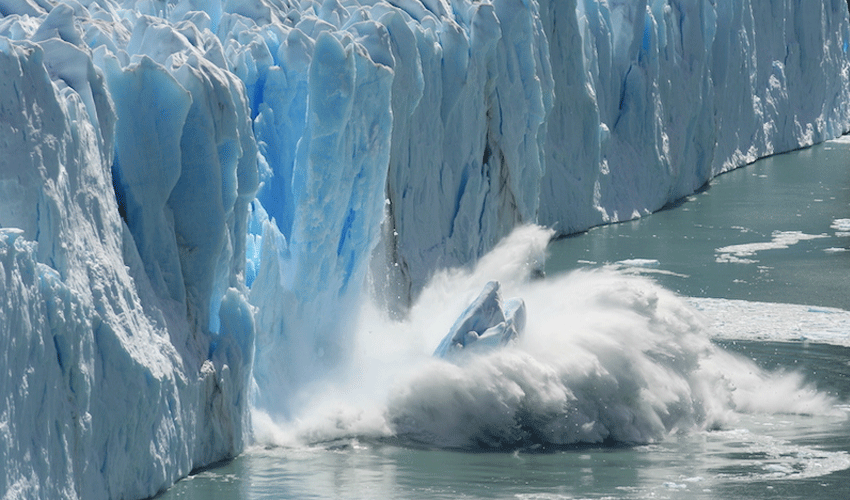
Gilgit-Baltistan- known for its towering peaks and sprawling glaciers – is currently in the grip of an unprecedented heatwave triggering fears of accelerated glacial melt and significant environmental damage in the region.
The region, which boasts more than 7,000 large natural glaciers—more than anywhere else outside the polar zones—is experiencing its worst-ever summer.
According to the Gilgit-Baltistan Environment Department, the area witnessed no snowfall during the winter season, and the dry spell has continued into summer with no rain recorded in June and July.
Speaking to Samaa TV Environment Department Director Khadim Hussain Nogami expressed concern over the changing weather patterns.
“The peak season for snowfall never arrived this winter. Now, in the peak of summer, we are facing a similar situation—no rain at all. This shift is alarming,” he said.
This extreme weather marks a stark deviation from Gilgit-Baltistan’s climatic norms. Last winter, temperatures dropped well below freezing, breaking long-held records.
In contrast, this summer, the mercury has soared to a staggering 48.5°C in some areas—an all-time high for the region.
“The heatwave has persisted for over six weeks now,” said Nogami. “Not only has the temperature risen in the lower belts, but even the upper mountainous regions are experiencing higher-than-usual temperatures. This is resulting in accelerated glacial melt and more frequent avalanches.”
Environmental experts warn that the continued rise in temperature could result in glacial lake outburst floods (GLOFs), posing severe threats to local communities, agriculture, and infrastructure.
Gilgit-Baltistan is already considered one of the most climate-vulnerable regions of Pakistan due to its geography and heavy reliance on natural resources.
The impact of this climatic shift is being felt across various sectors. Agriculture—heavily dependent on glacial water—is under pressure, while the tourism industry, a major source of income for the local population, is facing disruptions due to the scorching heat and ecological concerns.